Solo sign up
 School sign up
Year 3 Science – Plants – How are seeds dispersed? Lesson 6
Year 3 Science – Plants – How are seeds dispersed? Lesson 6
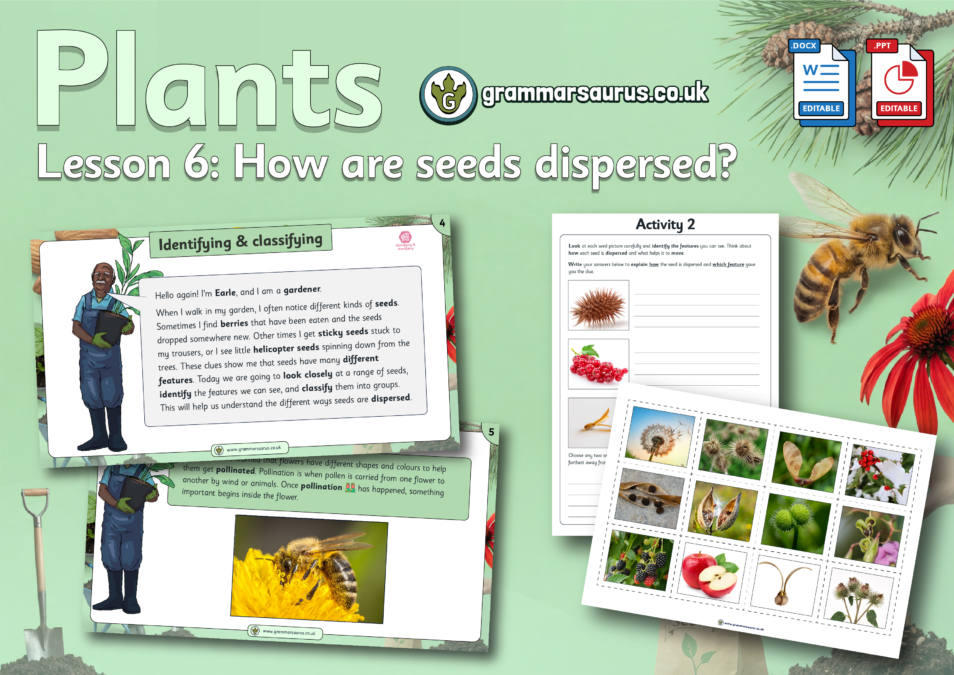
This editable differentiated lesson pack focuses on how seeds are dispersed and why dispersal is essential for plant survival. Through close observation and classification of real seeds and fruits, children identify features such as wings, fluff, hooks, pods and fleshy fruit, and link these structures to different dispersal methods including wind, animals, water and explosive pods. They learn how seeds form after pollination and fertilisation, and how the ovary changes to protect developing seeds. By comparing seed features and explaining how each one helps the seed travel away from the parent plant, children build secure scientific vocabulary and a clear understanding of how dispersal supports the plant life cycle.
The file includes the following resources: - editable teaching presentation - editable lesson plan - editable focus assessment worksheet - editable activity sheet - seed pod sorting - editable activity 2 sheet - editable additional activity ideas National Curriculum objectives Science: Year 3 Pupils should be taught to:
identify and describe the functions of different parts of flowering plants: roots, stem/trunk, leaves and flowers explore the part that flowers play in the life cycle of flowering plants, including pollination, seed formation and seed dispersal
Working scientifically: • Gathering, recording, classifying and presenting data in a variety of ways to help in answering questions • Reporting on findings from enquiries, including oral and written explanations, displays or presentations of results and conclusions
Updated to the Grammarsaurus Curriculum 2.0...
Hello,
Downloads are for members of Grammarsaurus only.
Please sign up below or login if you are already a member.
Hi! Sign in Or Solo sign up Or School sign up