Solo sign up
 School sign up
Year 3 Science – Plants – Why are flowers different shapes and colours? Lesson 5
Year 3 Science – Plants – Why are flowers different shapes and colours? Lesson 5
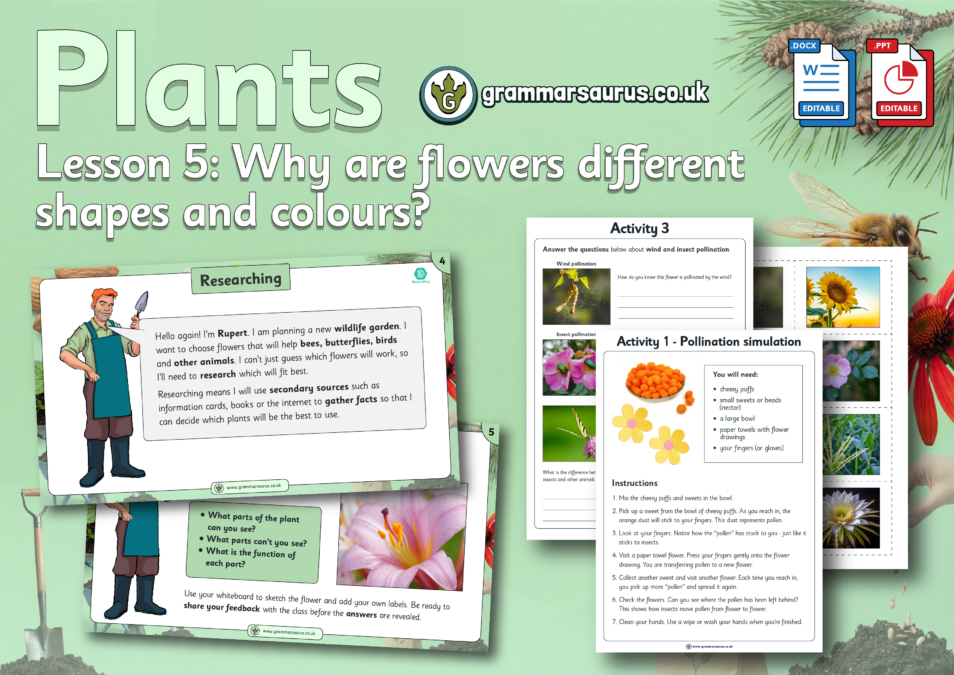
This editable differentiated lesson pack focuses on helping children understand that flowers vary in shape, colour and structure because they rely on different methods of pollination. Through guided research using information cards, children compare a range of flowers and the pollinators that visit them, learning that features such as bright petals, long tubes or the absence of petals are adaptations that support insect, bird or wind pollination. They revisit key flower parts and the process of pollination, then match flower characteristics to the pollinator or force that moves the pollen. By analysing and explaining these relationships, children develop secure scientific vocabulary and recognise that flower diversity is linked to how plants successfully reproduce.
The file includes the following resources: - editable teaching presentation - editable lesson plan - editable focus assessment worksheet - editable pollination instructions - editable pollination research cards(and scaffold) - editable activity sheet - editable additional activity ideas National Curriculum objectives Science: Year 3 Pupils should be taught to:
identify and describe the functions of different parts of flowering plants: roots, stem/trunk, leaves and flowers explore the part that flowers play in the life cycle of flowering plants, including pollination, seed formation and seed dispersal
Working scientifically: • Reporting on findings from enquiries, including oral and written explanations, displays or presentations of results and conclusions
Updated to the Grammarsaurus Curriculum 2.0...
Hello,
Downloads are for members of Grammarsaurus only.
Please sign up below or login if you are already a member.
Hi! Sign in Or Solo sign up Or School sign up